Top Innovations in Fire Departments for Enhanced Safety and Efficiency

Fire departments are most commonly public sector organizations that operate within a municipality, county, state, nation, or special district. They represent the frontline of emergency response in communities worldwide. From battling structural blazes to responding to medical emergencies, these organizations operate around the clock to protect lives and property. The world’s fire departments are found […]

Fire departments are most commonly public sector organizations that operate within a municipality, county, state, nation, or special district. They represent the frontline of emergency response in communities worldwide. From battling structural blazes to responding to medical emergencies, these organizations operate around the clock to protect lives and property. The world’s fire departments are found in nearly every country, forming the backbone of public safety.

This article covers the history, organization, core functions, technological advancements, funding, and community outreach efforts of fire departments. It is intended for public safety professionals, community leaders, and anyone interested in how fire departments operate and contribute to community safety. Understanding the structure and challenges of fire departments is essential for effective emergency preparedness and public safety. By exploring how fire departments function—and how modern tools like real-time digital signage can enhance their operations—readers will gain insight into the critical role these organizations play in community resilience.

Summary: The Role and Challenges of Modern Fire Departments

Fire departments protect life, property, and the environment through rapid emergency response and proactive prevention. Modern fire departments operate as “all-hazards” organizations, trained to handle nearly any type of emergency beyond just fighting fires. Most firefighters are trained as EMTs or Paramedics and frequently respond to medical calls. Fire departments face staffing shortages, mental health crises, and budget constraints while adopting new technology and wellness programs to address these challenges. Climate change is increasing the frequency of severe wildfires affecting fire response within residential areas. Fire departments implement peer support programs, counseling services, and wellness checks to address mental health issues among firefighters.

What is a fire department?

A fire department is an organization that provides fire prevention and fire suppression services as well as other rescue services. Fire departments are most commonly a public sector organization that operates within a municipality, county, state, nation, or special district. A fire department contains one or more fire stations within its boundaries and may be staffed by firefighters, who may be professional, volunteers, conscripts, or on-call.

Most departments also provide emergency medical services, making them critical to community health and safety. These organizations operate through networks of fire stations housing trained personnel who respond to incidents ranging from structure fires to vehicle collisions. Employers in fire departments are responsible for ensuring safety protocols are followed and for selecting appropriate machinery and equipment for safe and effective operations.

Full Range of Fire Department Services

A fire department is an organization that provides fire prevention and fire suppression services as well as other rescue services. Fire departments are most commonly a public sector organization that operates within a municipality, county, state, nation, or special district. A fire department contains one or more fire stations within its boundaries and may be staffed by firefighters, who may be professional, volunteers, conscripts, or on-call.

  • Fire departments may also run an ambulance service, staffed by volunteer or professional EMS personnel.
  • Modern fire departments operate as “all-hazards” organizations, trained to handle nearly any type of emergency beyond just fighting fires.
  • Most firefighters are trained as EMTs or Paramedics and frequently respond to medical calls.
  • Fire departments perform hazardous materials mitigation by identifying and containing chemical spills, gas leaks, or oil accidents.
  • Fire departments may provide specialized emergency services, such as hazardous materials response, technical rescue, search and rescue, and wildland firefighting.
  • Fire departments analyze local data to identify threats and strategically place equipment for community safety.
  • Fire departments face staffing shortages, mental health crises, and budget constraints while adopting new technology and wellness programs to address these challenges.

Types of Fire Departments

Fire departments fall into three main categories based on staffing:

Type

Description

Example

Career (Paid)

Full-time professional firefighters

FDNY (professional since 1865)

Volunteer

On-call community members

Rural California departments

Combination

Mix of paid and volunteer personnel

San Ramon Valley Fire Protection District

Examples of these types include large urban departments with only paid staff, small rural volunteer brigades, and suburban districts that blend both models.


Jurisdictionally, departments function at municipal, county, regional, or national levels. Funding typically derives from local property taxes (averaging 70-80% of budgets), supplemented by special assessments, federal grants like FEMA’s Assistance to Firefighters program, and community donations.

In the 19th century, cities began to form their own fire departments as a civil service to the public, obliging private fire companies to shut down.

Core functions include firefighting, search and rescue, hazardous materials response, vehicle extrication, and first-response EMS. Modern fire departments have also become information hubs, benefiting from real-time visual communication tools that deliver dynamic content to personnel throughout stations.

Employees and workers in fire departments are trained to minimize injuries and maintain safety during incidents, ensuring that all staff are prepared to handle emergencies while protecting themselves and others.

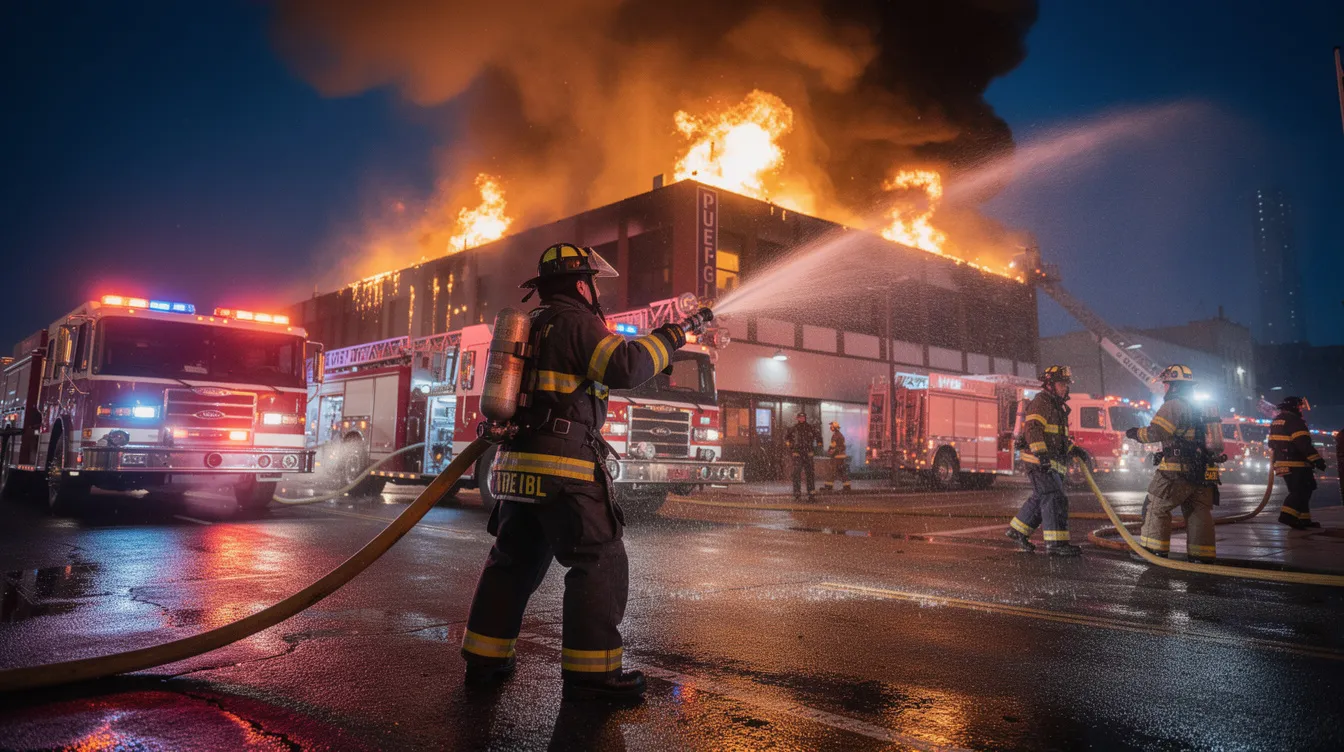
A group of firefighters in full protective gear is actively responding to a structure fire at night, using their specialized equipment to address the emergency situation. The scene highlights the importance of safety and training among fire department personnel as they work to prevent harm and manage the incident effectively.

Fire departments rely on a wide range of machinery and equipment, including fire engines, ladders, rescue tools, and protective gear. The first motorized fire department was organized in 1906 in Springfield, Massachusetts, marking a significant advancement in firefighting technology.

With a clear understanding of what a fire department is and the broad range of services it provides, we can now explore the historical development of these essential organizations.

History and development of fire departments

The evolution from bucket brigades to modern fire services reflects humanity’s ongoing responsibility to protect communities from harm. Ancient civilizations organized communal fire control efforts, but the first formalized public service emerged under Emperor Augustus around 6 CE. The importance of practice and training was recognized early on, as regular drills and exercises were essential for effective response and safety.

Rome’s vigiles comprised 7,000 personnel who served as both firefighters and night watchmen, equipped with vinegar-soaked blankets, hooks, and buckets. This organization established the foundation for professional fire protection that would develop over the centuries. The earliest known firefighting service was formed in Ancient Rome by Marcus Egnatius Rufus, setting a precedent for future fire departments.

The Great Fire of London in 1666 proved transformative, destroying 13,200 houses and 87 churches. The insights gained from this catastrophe led Nicholas Barbon to create insurance brigades where companies marked protected buildings with metal plaques—an early form of risk management. These events contributed to the accumulation of knowledge and best practices in fire safety.

Key milestones in fire service development:

  • 1672: Jan van der Heyden patents improved hand-pumped engines in Amsterdam
  • 1678: Boston establishes America’s first paid public fire department
  • 1736: Benjamin Franklin founds the Union Fire Company in Philadelphia
  • 1833: London consolidates 26 brigades into the London Fire Engine Establishment
  • 1906: Springfield, Massachusetts organizes the first motorized fire department

As fire departments evolved, research and accumulated knowledge have driven improvements in firefighting equipment and techniques, leading to safer and more efficient emergency response strategies.

Specialized departments also emerged, including campus brigades like Notre Dame’s 1879 student volunteer company and industrial fire teams at major refineries.

Money has always played a crucial role in establishing and maintaining fire departments, with funding sources evolving from private and insurance-based models to government budgets and public funding mechanisms.

With this historical perspective, we can now examine how modern fire departments are organized and structured to meet today’s challenges.

Organization and structure of modern fire departments worldwide

Modern fire departments worldwide maintain paramilitary hierarchies enabling rapid decision-making. While structure varies by country, most maintain clear chains of command and standardized training requirements.

Common hierarchy:

  • Firefighter: Entry-level operators handling hoses and equipment
  • Lieutenant: Supervises crew tactics on scene
  • Captain: Manages company operations and a specific apparatus
  • Battalion Chief: Commands multiple stations (typically 3-8)
  • Deputy/Assistant Chief: Oversees specialized divisions
  • Fire Chief: Directs the entire department and manages city liaisons

Station-level organization typically clusters engine companies for pumper trucks, ladder companies for aerial access, and specialty units like rescue squads. Shift patterns commonly follow 24-on/48-off schedules to maintain coverage.

Modern fire departments operate as ‘all-hazards’ organizations, trained to handle nearly any type of emergency beyond just fighting fires. Most firefighters are also trained as EMTs or Paramedics and frequently respond to medical calls. Fire departments may also run ambulance services, staffed by volunteer or professional EMS personnel, and increasingly leverage PowerPoint digital signage to keep both staff and the public informed with up-to-date safety information.

International models vary significantly:

Region

Model

Example

United States

Municipal

LAFD (106 stations, 3,500 firefighters)

United Kingdom

Regional

London Fire Brigade

Australia

State-level

Fire and Rescue NSW

France

Departmental

SDIS system

Poland

National

Państwowa Straż Pożarna

EMS integration is profound—FDNY deploys 4,000 EMTs alongside firefighters, with 75% of calls being medical. Many departments now utilize internal digital tools, including dashboards and screens displaying alerts, staffing rosters, and weather data in real time. Digital signage can also be used to communicate important information to both employees and customers in public-facing areas.


When it comes to safety protocols, exercising caution during all operations is essential to prevent injuries and ensure safe workplace practices. Regular meetings are held to discuss safety rules and procedures, promoting open communication and collaborative review among team members.

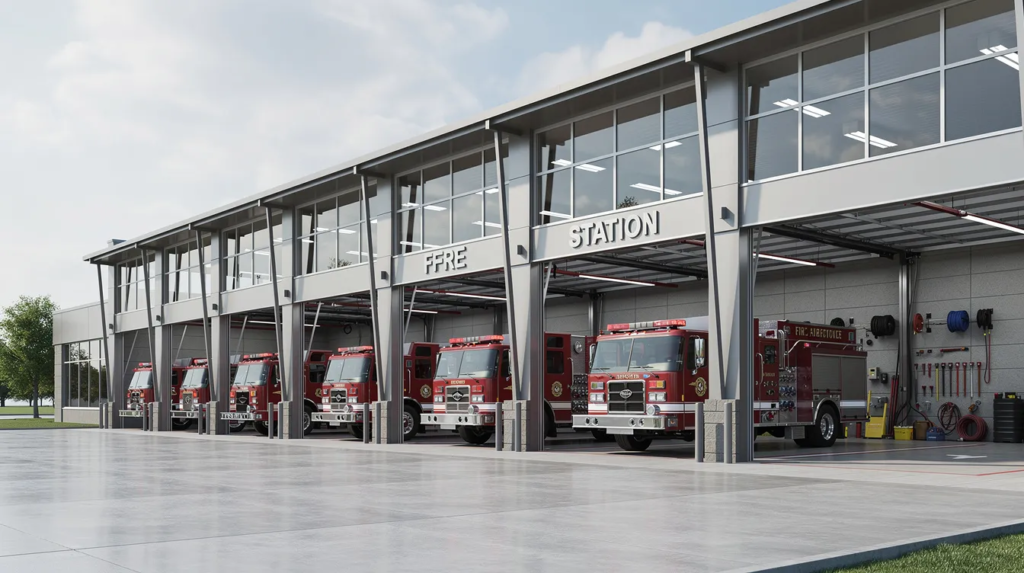
The image depicts a modern fire station featuring multiple apparatus bays filled with various firefighting equipment. The design emphasizes safety and efficiency, showcasing advanced tools and technologies that support fire department personnel in their emergency response duties.

With this organizational foundation in place, we can now explore the core roles and specialized units that enable fire departments to respond to a wide range of emergencies.

Core roles, responsibilities, and specialized units

Modern fire departments handle emergencies far beyond structural fires. NFPA data shows fire incidents now constitute under 5% of total responses, with departments answering over 27 million calls annually for diverse incidents.

Primary operational roles:

  • Fire suppression (residential, commercial, high-rise, industrial)
  • Rescue operations (traffic collisions, building collapses)
  • Emergency medical response (cardiac arrests, trauma, overdoses)
  • Public education (school visits, fire drills, smoke alarm campaigns)

Specialized units include:

  • HazMat teams: Chemical spill containment, hazardous materials mitigation, and gas leak response. Examples include identifying and containing chemical spills, gas leaks, or oil accidents.
  • Technical rescue: Confined space and high-angle operations
  • Marine units: Ship fires and waterway incidents
  • Wildland crews: Bushfire suppression during fire seasons
  • Airport ARFF: Aircraft incident response within 3 minutes
  • Drone and robotics teams: Utilizing drones and robotics for reconnaissance and hazardous material detection

Community risk reduction duties encompass code enforcement, building inspections, plan reviews, and prevention campaigns. Fire departments reduce risks by inspecting buildings for fire safety and enforcing fire codes to protect workers and prevent injuries. Departments apply standardized incident command systems (ICS) to manage large events, scaling from single-apparatus responses to national mobilizations.

With an understanding of these core roles and specialized units, let’s look at how fire departments train, equip, and support their personnel in daily operations.

Training, equipment, and daily life in the fire station

A typical 24-hour shift at a busy station begins with 0800 apparatus checks—verifying hose footage and SCBA cylinder pressure at 4,500 psi. Morning drills might include live-fire training, followed by afternoon public demonstrations and community education visits. Firefighters participate in daily exercise routines to meet the physical demands of their job, which includes carrying heavy gear.

Training Phases

  • Basic fire academy (12-24 weeks): Covers fire behavior, equipment operation, and EMT certification
  • Ongoing in-service drills: 40+ hours annually per NFPA standards
  • Specialized certifications: HazMat, technical rescue, and advanced EMS

Continuous training and practice are essential for employees to maintain readiness for varied, high-pressure situations. Emphasizing knowledge during training ensures effective and safe operations, while regular practice through drills prepares staff for emergency scenarios.

Daily Routines

  • Apparatus checks at the start of each shift
  • Morning drills and live-fire training
  • Afternoon public demonstrations and community education visits
  • Daily exercise routines to maintain physical fitness
  • Regular safety meetings and briefings

Personal Protective Equipment

  • Turnout gear (approximately 30 pounds) with Nomex layers
  • Helmets and SCBA with heads-up displays
  • PASS devices alarming after 30 seconds of immobility
  • Thermal imaging cameras and gas detectors

Using proper equipment and exercising caution during all operations is critical to prevent injuries. Employees are trained to follow safety protocols and use protective gear to minimize risks.

Modern station layouts incorporate apparatus bays, dormitories, communal kitchens, gyms for fitness testing, and watch offices where personnel monitor dispatch systems. These spaces increasingly feature communication screens for shift schedules, call statistics, and safety notices, often powered by real-time digital signage platforms like SignageTube Live.

Fire departments also address mental health by implementing peer support programs, counseling services, and regular wellness checks to support employees facing stress and mental health challenges.

Fire departments experience increased call volume for medical emergencies, even as the number of structure fires has decreased.

A group of firefighters is engaged in training exercises, wearing protective equipment to enhance their safety and skills. This training is essential for preparing personnel to respond effectively to fire incidents and medical emergencies in the workplace.

With a look at daily life and training, let’s examine the physical infrastructure and vehicles that support fire department operations.

Fire stations and vehicles

Fire stations are the operational heart of every fire department, serving as the base where personnel, equipment, and vehicles are housed and maintained. Strategically located throughout cities and communities, these stations are designed to maximize safety and minimize response times, ensuring that fire department personnel can quickly address emergencies as they arise.

Inside each fire station:

  • Essential equipment and tools are meticulously organized and regularly inspected to guarantee readiness for any incident.
  • Firefighters rely on a diverse fleet of vehicles, each tailored to specific types of emergencies.

Types of vehicles include:

  • Fire engines: Equipped with hoses, pumps, and water tanks to combat fires
  • Ladder trucks: Provide aerial access for rescues and high-rise incidents
  • Ambulances: Stocked with advanced medical supplies, enabling rapid response to medical emergencies and supporting the health and safety of the community

The ability to operate efficiently from well-equipped stations, with access to the right vehicles and tools, is crucial for fire departments to fulfill their mission. Whether responding to a structure fire, a hazardous materials incident, or a medical emergency, the combination of skilled personnel, essential equipment, and specialized vehicles ensures that every call for help is met with professionalism and speed.

Fire stations and their vehicles are not just physical assets—they are vital components in the ongoing effort to protect lives, prevent incidents, and maintain public safety.

With the infrastructure in place, fire departments also focus on educating the public and engaging with the community to prevent emergencies before they occur.

Public education and community outreach

Educational Initiatives

Public education and community outreach are essential strategies that fire departments use to prevent incidents and promote a culture of safety. By proactively engaging with the community, fire departments help individuals and organizations understand fire risks and adopt safer practices in their homes, workplaces, and public spaces.

Fire departments implement a variety of educational initiatives, including:

  • Fire safety training sessions
  • School visits
  • Community events

These programs teach essential skills such as how to use a fire extinguisher, create an evacuation plan, and recognize fire hazards.

Community Collaboration

Collaboration with local organizations and businesses further extends the reach of public education campaigns. By working together, fire departments and their partners can implement targeted programs that address specific community needs, from smoke alarm installations to fire drills and safety workshops. These outreach efforts not only educate but also build trust and foster a sense of shared responsibility for safety.

Role of Digital Signage

Digital signage plays a key role in these efforts, allowing departments to deliver dynamic, up-to-date safety messages and training reminders across multiple locations, especially when built from PowerPoint-based digital signage content and best practices. With the ability to display important information on screens in public buildings, schools, and even local businesses, digital signage helps ensure that safety tips and emergency procedures are always accessible.

Through the use of modern tools like digital signage and ongoing education initiatives, fire departments empower the public to take an active role in preventing fires and other emergencies, ultimately supporting the department’s mission to protect and serve the community.

Having explored public outreach, let’s turn to the financial aspects that underpin fire department operations.

Budget and funding for fire departments

Effective budget and funding management is fundamental to the success of any fire department. The ability to provide essential services, maintain safety standards, and support personnel depends on securing and wisely allocating financial resources.

Fire departments typically receive funding from a mix of sources:

  • Government sources (local, state, or national)
  • Grants
  • Private donations

These funds are used to cover the costs of:

  • Equipment
  • Training
  • Day-to-day operations

With increasing demands and limited budgets, fire departments are continually seeking ways to optimize their resources. Exploring new technologies, such as free digital signage software, allows departments to enhance communication, streamline training, and prevent incidents without significant additional costs by using PowerPoint for digital signage with step-by-step best practices. Digital signage offers a cost-effective platform for delivering critical information, scheduling training sessions, and sharing safety updates with personnel and the public—helping departments do more with less.

Investing in modern tools not only supports the department’s ability to maintain essential equipment and provide ongoing training but also improves overall safety and operational efficiency. By leveraging digital signage and other innovative solutions, fire departments can maximize the impact of their funding, ensure that personnel have the support they need, and maintain a high level of service for the community.

Ultimately, careful budget planning and the adoption of new technologies empower fire departments to fulfill their mission: protecting lives, preventing harm, and responding effectively to emergencies—no matter the financial challenges they face.

With funding strategies in mind, let’s examine how digital signage and technology are transforming fire department operations.

Government and Public Services: Digital signage for fire departments (real-time, on-prem)

Fire departments exemplify government services where real-time information access directly impacts outcomes. Digital signage allows fire departments to engage with the community and customers by displaying educational content and safety tips, helping to increase public awareness and safety. Fire departments can also manage digital signage content remotely, allowing for quick updates during emergencies. Shaving 30-60 seconds off response times through visual dispatch feeds can save lives during medical emergencies.

Real-time on-premises digital signage refers to locally controlled screen networks within fire stations and command centers displaying live content without relying solely on cloud connectivity. This includes incident alerts, weather radar, crew assignments, and internal messages—all controlled on your own network. Digital signage supports communication with both employees and customers by delivering timely information, safety protocols, and operational updates. Ongoing research and technological advancements continue to improve digital signage solutions for fire departments, enhancing their ability to inform, protect, and serve their communities.

Specific use cases for fire departments:

  • Live call queues from CAD systems displayed in watch rooms
  • Apparatus availability boards in bays
  • ICS role assignments during major incidents
  • Training schedules and equipment maintenance deadlines
  • Weather warnings correlating to increased call volumes
  • Insights from data analytics platforms help fire departments predict fire behavior, allocate resources efficiently, and improve overall response strategies
  • Analyzing local data enables fire departments to identify threats and strategically place equipment for enhanced community safety

Tips for planning deployment:

  1. Assess critical information needs: Identify KPIs like turnout times under 1:20
  2. Choose durable hardware: Select IP5X-rated screens for apparatus bays
  3. Define content control: Establish who manages updates (training chiefs, admin staff)
  4. Integrate with existing systems: Connect to CAD, scheduling software, and weather feeds
  5. Employers should develop and update a hazard control plan: Employers must create and regularly update a hazard control plan to protect workers during emergencies. This plan should include provisions for nonroutine operations and foreseeable emergencies to ensure comprehensive safety coverage.
  6. Discuss safety procedures in regular meetings: Hold regular safety meetings to discuss new safety procedures, review safety rules, and provide ongoing training. Open communication helps keep workers informed and engaged in maintaining a safe work environment.
  7. Involve workers in safety planning: Employers should involve workers in identifying hazards, assessing risks, and selecting control options. Workers’ input is valuable for effective hazard control, especially during nonroutine operations.
  8. Track and evaluate controls: Employers should track progress in implementing safety controls and inspect and evaluate their effectiveness after installation. Select controls that are the most feasible, effective, and permanent to protect workers and maintain high safety standards.

Deployment timeline for a medium department (5-10 stations):

Phase

Duration

Tasks

Planning

1-2 weeks

Stakeholder workshops, requirements gathering

Installation

1-3 days/site

Cabling, mounting, network connection

Content design

3-5 days

Templates aligned with SOGs and branding

Training

4 hours/shift

Staff orientation on content updates

Why alternatives fall short:

  • Printed notices: Obsolete within hours during busy shifts
  • Email/messaging apps: 40% ignored during active operations
  • Custom in-house systems: Require dedicated IT staff ($150k+ annually)
  • Free digital signage software: Often lacks reliability for mission-critical environments

SignageTube Live for fire services

SignageTube Live is purpose-built for secure, on-prem deployments in government and public services. It maintains content within your infrastructure while providing central management across as many screens as needed. The platform supports a digital signage network designed for mission-critical uptime.

Watch room dashboards can display live dispatch feeds, weather alerts, and staffing rosters simultaneously. Bay-area screens show apparatus status, inspection checklists, and scheduled drills—all without depending on external web connectivity.

PowerPoint integration

Many training officers already create PowerPoint digital signage presentations for education and briefings. SignageTube Live’s intuitive interface allows you to convert existing slides into stunning PowerPoint-based digital signage content without new tools. This combination lets agencies implement digital signage using familiar features and proven PowerPoint presentation design techniques for digital signage.

Content design tips:

Real-world scenario

Consider a 300-person department equipping 8 stations with SignageTube Live. After deployment, shift briefings dropped from 15 minutes to 5 minutes through visual rostering. Safety check compliance reached 98% with timed reminder loops, underscoring how safety rules in the workplace protect employees, customers, and the company’s reputation. Regular caution and practice, such as scheduled drills and walk-throughs, are essential to prevent injuries and ensure everyone is prepared for emergencies. EMS transport coordination improved by integrating arrival data on screens—demonstrating how the right platform delivers measurable business benefits. Additionally, with climate change increasing the frequency of severe wildfires, fire departments face greater challenges in response, making effective communication and safety compliance even more critical.

Fire agencies seeking to explore on-prem digital signage should consider how this technology fits their broader communication strategy. While SignageTube offers cloud-based options, SignageTube Live addresses the specific needs of services where data control, uptime, and local operation matter most. Connect with your phone or device to manage content, or use any browser for web-based administration across your organization.


SignageTube
Privacy Overview

This website uses cookies so that we can provide you with the best user experience possible. Cookie information is stored in your browser and performs functions such as recognising you when you return to our website and helping our team to understand which sections of the website you find most interesting and useful.