
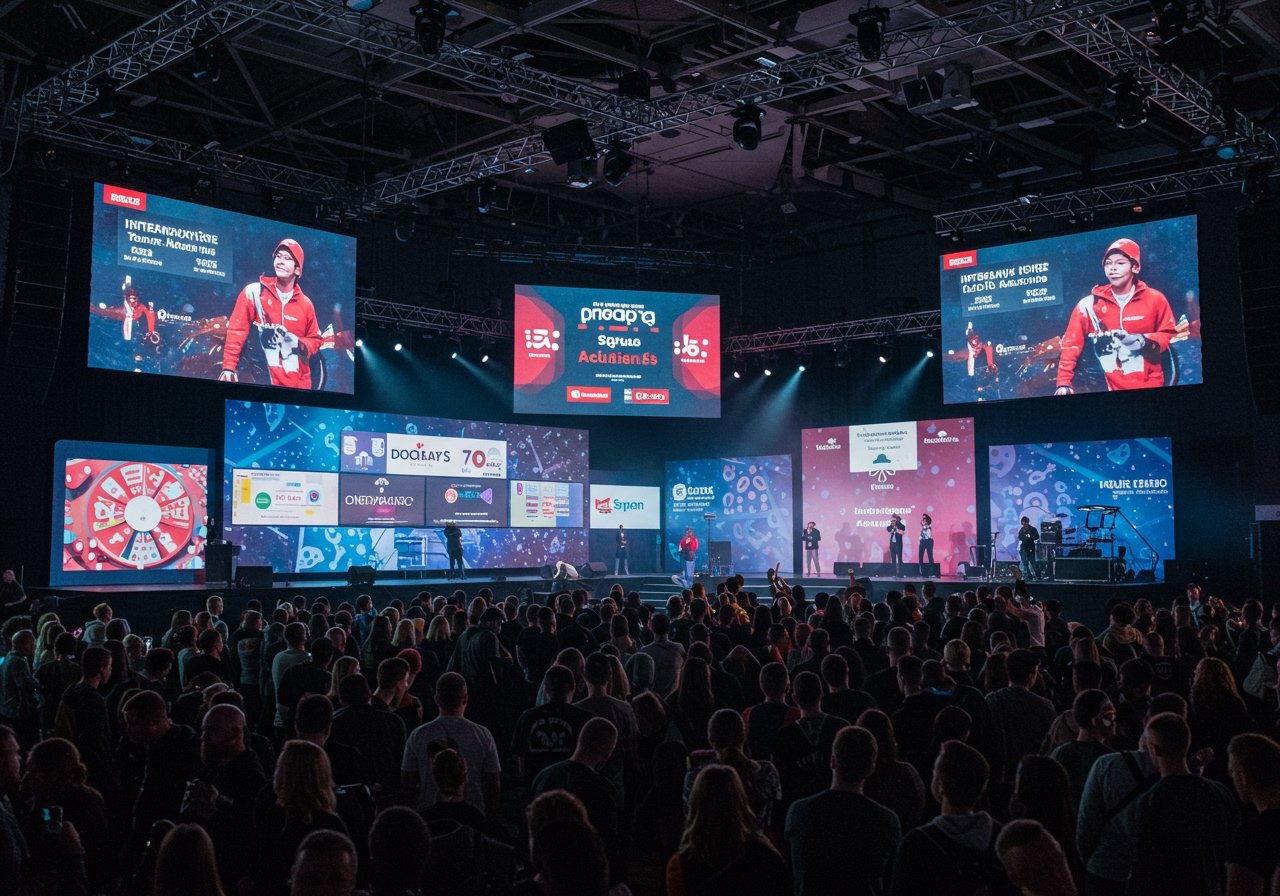
Exhibitions and live events move fast. A session room changes, a sponsor activates a surprise giveaway, a queue builds at registration, or weather forces an entrance reroute. In that moment, static signage becomes friction.
Real-time content broadcasting solves that friction by turning every screen into a live communication channel—so attendees always know what’s happening right now, and organizers can steer the experience with confidence.
What real-time content broadcasting means for events
Real-time broadcasting is the ability to update what’s shown on digital screens across an event venue—immediately, remotely, and at scale. Instead of printing updates (or hoping people check an app), organizers can push changes to lobby displays, session-room screens, wayfinding kiosks, exhibitor directories, and sponsor placements in minutes—or seconds.
At a practical level, it’s about three capabilities:
- Dynamic content updates (schedules, room changes, announcements, pricing, wait times)
- Audience engagement (live social walls, interactive prompts, QR campaigns, live stats)
- Seamless dissemination (one message, many screens, consistent and timely)
Why static signage fails during exhibitions (and what replaces it)
When events scale, communication breaks first. Attendees don’t get lost because venues are big—they get lost because information isn’t synchronized.
Here’s the shift event centers are making:
| Event communication need | Static signage outcome | Real-time broadcasting outcome |
|---|---|---|
| Session and room changes | Outdated signs and confused attendees | Instant schedule updates on every relevant screen |
| Wayfinding at scale | Bottlenecks at help desks | Dynamic wayfinding and room-by-room guidance |
| Sponsor activations | Limited rotations, low measurement | Timed campaigns, proof of play, better sell-through |
| Safety and emergency messages | Slow, inconsistent reach | Immediate visual overrides across the network |
| Operational messaging | Staff hears it late | Back-of-house screens update instantly |
Real-time screens reduce cognitive load. People stop second-guessing where to go, what’s next, and whether they’re missing something.
Faster navigation, fewer interruptions
Large venues benefit massively from connected wayfinding and meeting-room signage tied to live scheduling systems. For example, the Las Vegas Convention Center’s digital experience includes interactive wayfinding, meeting-room displays, and integrations with facility scheduling data—so agendas and space information can update without reprinting signage.
More “in-the-moment” engagement
When content responds to what attendees are doing—time of day, crowd density, session start times—screens become part of the event, not just decoration.
A strong example is the NRF 2026 deployment at the Javits Center, where real-time navigation supported tens of thousands of sessions and sustained engagement while helping attendees find booths, stages, and amenities more efficiently. (eventindustrynews.com)
Less anxiety when plans change
A live message that says “Room change: now in Hall B, Level 3” beats an app notification many attendees won’t see (or won’t trust). Real-time broadcasting creates a single source of truth across the venue.
Event operations run smoother with real-time broadcasting
Real-time content isn’t only “front of house.” It’s an operations tool.
Central control across many zones
Major event centers increasingly use unified backends that allow organizers to update large fleets of displays instantly, with role-based access (so exhibitors and event teams can update what they own without breaking venue-wide standards).
Emergency messaging and content overrides
Modern venue signage networks often integrate with life safety systems for immediate alerts and priority messaging. That ability to override normal content can be critical when seconds matter.
Better sponsor execution (and easier renewals)
Sponsors want proof, timing, and relevance. Real-time broadcasting makes it possible to:
- Run ads only during peak traffic windows
- Trigger messages near specific entrances or halls
- Rotate sponsor creative by day, audience segment, or event phase
- Document delivery (proof of play) for reporting
Mini case studies: Real-time broadcasting in major event environments
Las Vegas Convention Center: wayfinding + scheduling integration at scale
The Las Vegas Convention Center’s digital ecosystem includes interactive wayfinding and meeting-room displays connected to scheduling data—enabling daily agendas and space messaging to stay current without printing signs. The solution also supports safety alert integration for fast venue-wide messaging. (svconline.com)
Javits Center (NRF 2026): real-time navigation that keeps attendees moving
At NRF 2026, real-time indoor navigation helped attendees locate exhibitors, stages, meeting rooms, and amenities, generating strong engagement and positive feedback—demonstrating how “live” information reduces friction in complex venues. (eventindustrynews.com)
McCormick Place (IMTS 2024): experience design that reduces wayfinding friction
IMTS 2024 at McCormick Place highlights how large shows invest heavily in navigation and guidance systems to keep attendee flow moving—because every moment spent lost is a moment not spent engaging exhibitors. (insights.ges.com)
What to broadcast in real time during an event (a practical content map)
Real-time broadcasting works best when you plan content by moment and location.
High-impact real-time content types
- Session schedules and room assignments (with “starting soon” countdowns)
- Wayfinding cues (hall highlights, “you are here,” route nudges during peak times)
- Queue and wait-time messaging (registration, shuttles, food areas)
- Sponsor activations (timed takeovers, QR-based participation, winner announcements)
- Live updates (weather, transit, parking, last-minute changes)
- Safety messaging (priority overlays and emergency instructions)
How SignageTube supports real-time event communication (without the complexity)
For exhibitions and events, speed and control matter. SignageTube is built for cloud-based digital signage management—so event operators can update content remotely, schedule playlists, and keep oversight across multiple screens and sites. (signagetube.com)
Key event-ready capabilities include:
- PowerPoint-based design for fast creation using tools teams already know
- Smart scheduling with timezone support and bulk deployments across locations
- Playlist management for combining presentations, videos, and images into structured rotations
- Live display overview so operators can see what’s playing on remote screens
- Proof of play logging to support reporting and sponsor accountability
For organizations that want to go further, INSYNCR specializes in data-driven, real-time digital signage—helping teams move beyond “scheduled loops” into signage that reacts to live event data, operational triggers, and audience context.
To explore SignageTube, start here: SignageTube
A simple rollout plan for real-time broadcasting at your next event
Step 1: Define your “must-update” moments
Focus on the updates that cause the most attendee confusion:
- room changes
- session delays
- directional reroutes
- sponsor activations
- safety messages
Step 2: Design content zones (and keep them consistent)
Common zones include:
- entrances and registration
- main corridors
- session-room thresholds
- exhibitor directory points
- food and lounge areas
- staff-only operations zones
Step 3: Build a control workflow (who can update what)
Use role-based access thinking:
- venue ops controls global messages
- show management controls schedules and announcements
- sponsors control their approved creative windows
Step 4: Measure what matters
Track outcomes like:
- reduced info desk load
- increased session attendance on time
- higher sponsor engagement (QR scans, dwell time near activations)
- fewer operational interruptions
The takeaway: Real-time broadcasting turns screens into an event advantage
The best events feel effortless—not because nothing goes wrong, but because communication stays clear when things change.
Real-time content broadcasting helps you deliver that feeling at scale: less confusion, better flow, stronger sponsor outcomes, and a more confident, connected attendee experience. When you combine cloud control with data-driven signage strategy, your venue doesn’t just display information—it actively improves the event.